
New York prioritizes championship aspirations over in-season tournament recognition
The New York Knicks have made a definitive statement about their championship priorities. Following their NBA Cup victory, the franchise has opted not to hang a banner at Madison Square Garden, breaking from the precedent set by the tournament’s previous two winners.
The decision comes just days after the Knicks defeated the San Antonio Spurs 124-113 in Las Vegas to claim their first championship of any kind since winning the NBA Finals in 1973. While the historic victory brought celebration and over $500,000 in prize money to each player, the organization has chosen to keep their focus firmly fixed on a larger goal: securing the franchise’s third NBA championship.
Sources indicated the team is “focused on the bigger picture”, referring to their pursuit of an NBA title after falling short in the Finals in 1994 and 1999. The Knicks will still honor the achievement with a ceremony before Friday’s game against the Philadelphia 76ers, giving home fans an opportunity to celebrate with the players.
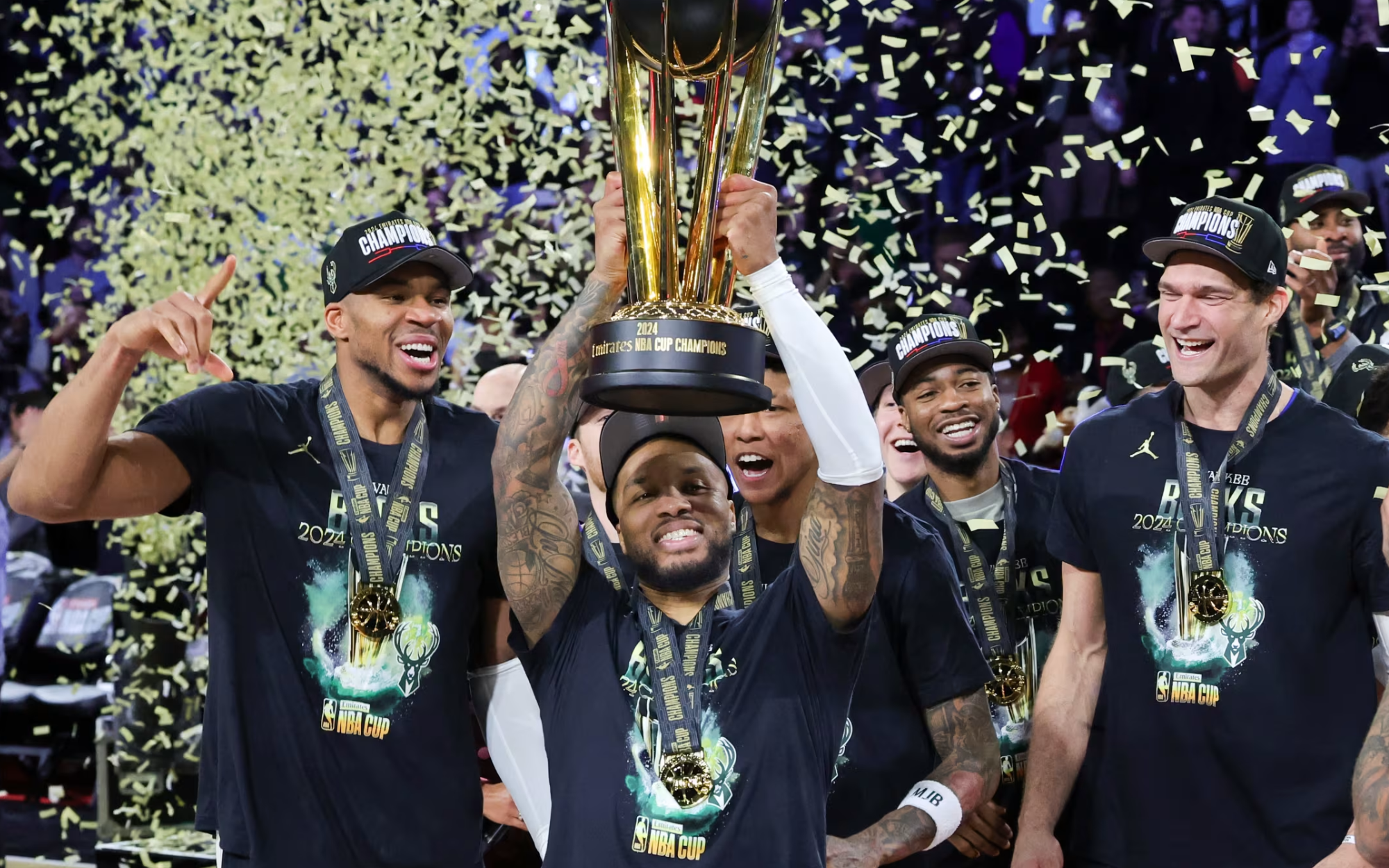
This marks a departure from how previous NBA Cup champions have approached their victories. Both the Los Angeles Lakers, who won the inaugural tournament in 2023, and the Milwaukee Bucks, last year’s champions, raised banners in their home arenas to commemorate the achievement. The Knicks are now the first team in the tournament’s three-year history to decline displaying a banner for their NBA Cup triumph.
What is the NBA Cup?
The NBA Cup, formerly known as the In-Season Tournament, represents the league’s innovative approach to adding excitement and competition to the early portion of the regular season. Inspired by European soccer’s tournament formats, the NBA introduced this mid-season competition in 2023 to create meaningful games during November and December when playoff races are still developing.
The tournament divides all 30 NBA teams into six groups of five teams each, with three groups in the Eastern Conference and three in the Western Conference. Teams are sorted into groups based on their previous season’s standings to ensure competitive balance. Beginning in late October and running through late November, each team plays four group stage games against the other members of its group, with two games at home and two on the road.
These group play games serve dual purposes as they count toward both the tournament standings and the regular season record. After group play concludes, eight teams advance to a single-elimination knockout round. The six group winners automatically qualify, along with one wild card team from each conference, determined by the best second-place record.
The quarterfinals take place at the home arenas of the higher-seeded teams, while the semifinals and championship game are held at a neutral site in Las Vegas. The tournament provides significant financial incentives, with players on the championship team earning approximately $500,000 each, while runners-up receive around $200,000 per player.
Who Won the NBA Cup Finals?
The 2025 NBA Cup championship belonged to the New York Knicks, who captured the title with their victory over the San Antonio Spurs in Las Vegas. The game showcased the Knicks’ depth and resilience, with Jalen Brunson leading the way and earning NBA Cup MVP honors. Brunson averaged 33.2 points across the six tournament games and contributed 25 points, four rebounds, and eight assists in the championship game.
The victory was particularly meaningful for the franchise and its fans, representing New York’s first championship of any kind in over five decades. Head coach Mike Brown, in his first season with the Knicks after his departure from Sacramento, secured his first major coaching achievement with the organization.
Prior to the Knicks’ triumph, the NBA Cup had produced two different champions. LeBron James and the Los Angeles Lakers claimed the inaugural tournament title in 2023, with James earning the first-ever tournament MVP award. The following year, Giannis Antetokounmpo led the Milwaukee Bucks to the 2024 championship, defeating the Oklahoma City Thunder while taking home MVP honors himself.
Does the NBA Cup Count as Regular Season Games?
The NBA Cup features a unique structure that integrates tournament play into the regular season schedule. All games in the group stage and knockout rounds, including the quarterfinals and semifinals, count as official regular season games. These contests factor into team standings, player statistics, and all regular season records.
However, there is one notable exception. The championship game does not count toward the regular season standings or individual player statistics. This design prevents teams from gaining an unfair advantage in the playoff race based solely on reaching the finals. A team that wins the championship plays one more game than teams eliminated in the semifinals, but that final game doesn’t affect their win-loss record or playoff positioning.
To maintain the NBA’s standard 82-game schedule, the league has implemented a balanced approach. The 22 teams that don’t qualify for the knockout rounds play two additional regular season games during December on nights when tournament games are being played. The four teams eliminated in the quarterfinals play one extra regular season game to ensure everyone completes the full 82-game slate.
This integration means that teams take the NBA Cup seriously from the opening tip. Unlike purely standalone tournaments where teams might rest stars, the regular season implications create genuine competitive stakes throughout group play. Conference matchups in the tournament can also impact playoff tiebreakers, adding another layer of importance to each game.
How Many Qualify for the NBA Cup?
Eight teams advance from group play to compete in the NBA Cup knockout rounds. The qualification process creates an intense competition throughout the group stage, as teams battle for limited spots in the tournament’s final phase.
From each conference, three teams earn automatic qualification as group winners. Each of the three groups in the Eastern Conference and the three groups in the Western Conference has one team that advances by finishing with the best record in its group. These six group winners represent the top tier of tournament competitors.
The final two spots are filled by wild card teams, with one coming from each conference. These wild cards go to the teams with the best records among all second-place finishers in their respective conferences. This format ensures that strong teams in competitive groups still have a pathway to advancement even if they don’t win their group outright.
When teams finish group play with identical records, the NBA employs a specific tiebreaker system. The first tiebreaker is head-to-head record between the tied teams. If that doesn’t resolve the tie, the next factor is point differential in group play games, followed by total points scored in group play. Should ties persist, the league looks at the previous season’s regular season record, and if necessary, conducts a random drawing.
The tournament structure creates compelling basketball throughout November as teams compete for qualification. Point differential serves as a critical tiebreaker, which often leads to teams maintaining aggressive play even in games where the outcome appears decided. This format choice has resulted in exciting finishes and meaningful basketball during a portion of the season that previously saw less intensity.
The Knicks’ decision to forgo an NBA Cup banner at Madison Square Garden sends a clear message about organizational priorities. While they’re proud of the achievement and will celebrate with their fans, the team’s sights remain firmly set on hoisting a championship banner that represents the ultimate goal in professional basketball. As the regular season continues, New York will look to translate their tournament success into the playoff momentum needed to chase that elusive third NBA championship.