
Understanding Trump’s reaction to Reiner’s murder reveals a disturbing pattern in American political discourse that transcends any single tragedy
President Donald Trump’s response to the murder of acclaimed director Rob Reiner and his wife Michele has reignited concerns about political rhetoric, violence, and presidential responsibility. Within hours of the couple being found stabbed to death in their Los Angeles home, Trump took to social media with a statement that shocked even some of his staunchest Republican allies.
The Immediate Aftermath
On Monday morning, as investigators were still piecing together the tragic events at the Reiner residence, Trump posted on Truth Social that the director’s death was caused by his criticism of the president. Trump characterized Reiner’s passing as resulting from what he termed “Trump Derangement Syndrome,” describing the late filmmaker as someone with an incurable affliction that led to his demise.
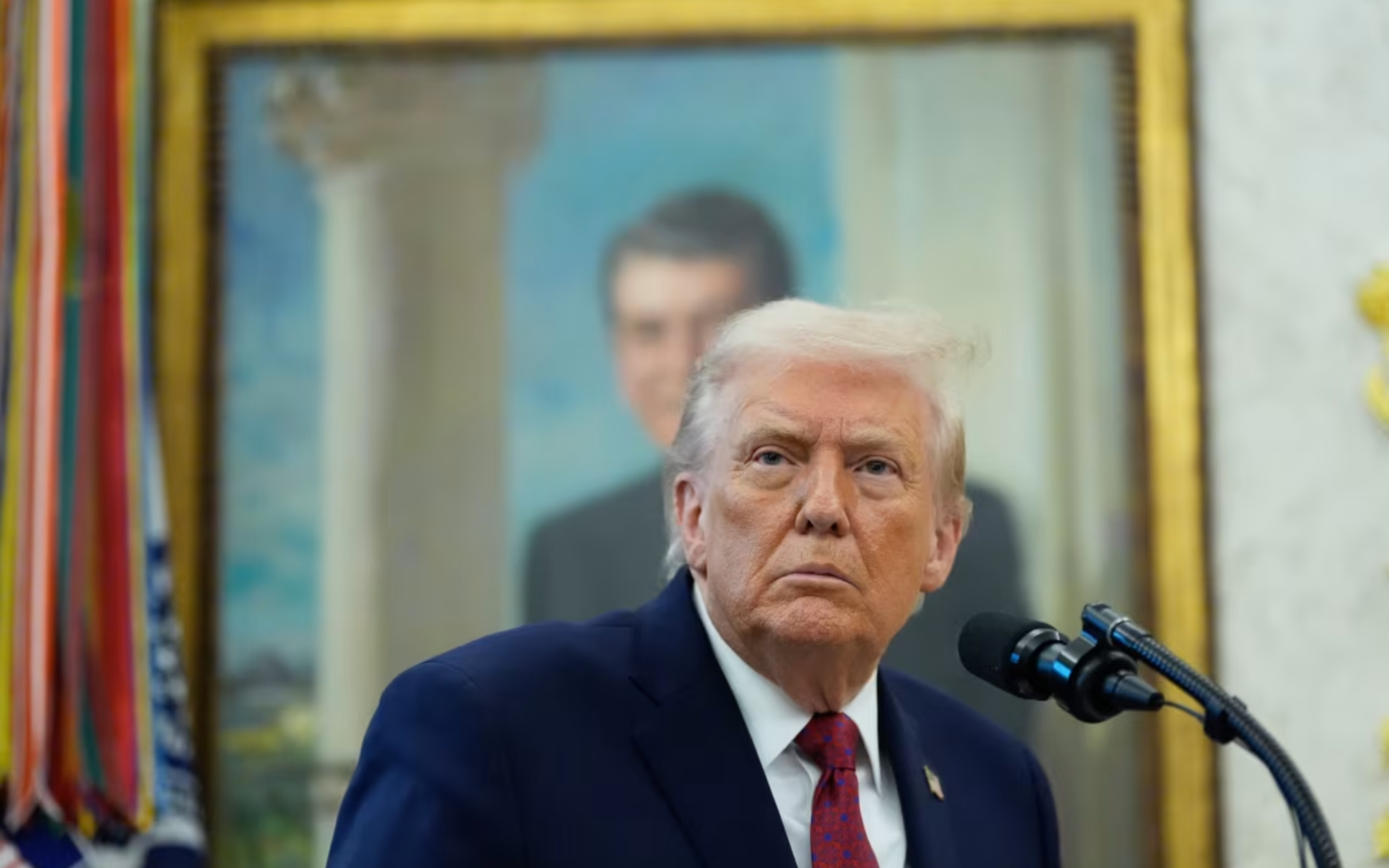
The president doubled down during an Oval Office appearance later that day, telling reporters he believed Reiner was harmful to the country and dismissing concerns raised by Republican lawmakers. Trump’s reaction to Reiner’s murder drew immediate condemnation from across the political spectrum, including from typically loyal supporters.
Republican Representative Marjorie Taylor Greene, who has previously been one of Trump’s most vocal defenders, broke ranks to call the deaths a family tragedy rather than a political issue. Representative Thomas Massie of Kentucky challenged colleagues to defend the president’s comments, calling them inappropriate discourse about someone who had been brutally murdered. Even Fox News commentators found rare unanimity in criticizing the president’s response.
A Pattern of Politicizing Violence
What makes Trump’s reaction to Reiner’s murder particularly concerning is not its uniqueness, but rather how it fits into a well-documented pattern. America has witnessed this script before, with the president’s approach to political violence varying dramatically based on the political affiliation of those involved.
When conservative activist Charlie Kirk was assassinated in September, Trump characterized it as evidence that radical left political violence was plaguing the nation. He used the tragedy to launch investigations into liberal organizations and donors, claiming without evidence that they promoted violence. The administration’s response was swift and comprehensive, with promises to dismantle what they alleged was a network of violent liberal groups.
The contrast becomes stark when examining Trump’s reactions to violence affecting Democrats. After former Minnesota House Speaker Melissa Hortman and her husband were murdered in June, Trump posted about the incident on social media but never mentioned the partisan nature of the targeted attack. When asked about calling Minnesota Governor Tim Walz after the shootings, Trump dismissed the idea as a waste of time, describing the governor as clueless.
Historical Context of Presidential Rhetoric
Trump’s pattern of politicizing violence extends throughout his political career. During the 2018 mail bombing campaign targeting Democrats and CNN, Trump criticized media outlets for mentioning the suspect’s political affiliation rather than focusing on the violence itself. When Paul Pelosi was attacked with a hammer by an intruder at his San Francisco home in 2022, Trump later mocked the incident at rallies.
Scholars who study political rhetoric have documented Trump’s use of violent imagery and inflammatory language since his 2016 campaign. Research has connected this rhetoric to increased threats against journalists, politicians, and minority groups. A 2020 analysis by ABC News identified 54 cases where Trump was explicitly referenced in court documents related to violence or threats.
The president’s language often includes what experts describe as stochastic terrorism, using rhetoric that may inspire violence while maintaining plausible deniability. His comments have ranged from suggesting shooting looters to praising politicians who assaulted reporters, creating what some historians describe as an unprecedented level of violent political discourse from a sitting president.
The Cost to Democratic Norms
Trump’s reaction to Reiner’s murder represents more than poor taste or political insensitivity. It reflects a fundamental challenge to the expectation that presidents serve as unifying figures during national tragedies. Traditional presidential responses to violence have emphasized healing, condemned all forms of political violence equally, and avoided exploiting tragedy for political advantage.
The erosion of these norms has real consequences. When political leaders selectively condemn violence based on the political affiliation of victims, it sends a message that some lives matter more than others in the national discourse. This asymmetric response to tragedy can deepen divisions and potentially embolden those who might commit violence against perceived political enemies.
A Nation Divided Over Violence
The fracturing of American politics has created an environment where even responses to tragedy become partisan battlegrounds. Trump’s supporters often defend his rhetoric by pointing to years of criticism from figures like Reiner, arguing that the director’s vocal opposition to Trump made any sympathetic response unnecessary. Some conservative commentators have suggested that showing respect for Trump’s critics would be hypocritical given past attacks on the president.
Yet this justification misses a crucial distinction between political disagreement and basic human decency in the face of tragedy. Throughout American history, political opponents have traditionally set aside their differences when confronted with violence and loss. This norm exists not to protect politicians’ feelings, but to maintain the social fabric that allows democracy to function despite deep disagreements.
The Broader Implications
Trump’s reaction to Reiner’s murder occurs against a backdrop of rising political violence in America. Data from Reuters and other organizations show that politically motivated violence has reached levels not seen since the 1970s, with incidents increasingly targeting individuals rather than property. The role of inflammatory rhetoric in this rise remains debated, but many experts believe that language from influential leaders shapes the boundaries of acceptable behavior among their followers.
The president’s approach also reflects his broader governing strategy of treating political opponents as enemies rather than fellow citizens with different views. This framework, combined with his administration’s targeting of perceived political foes through government agencies, represents what critics describe as an authoritarian approach to democratic governance.
Moving Forward
As America processes yet another tragedy politicized by presidential rhetoric, the question becomes not just about Trump’s individual response but about what standards the nation will accept from its leaders. The bipartisan criticism of Trump’s reaction to Reiner’s murder suggests that some lines remain that even partisan loyalty cannot erase.
However, the pattern of behavior documented over nearly a decade indicates that individual rebukes may not be sufficient to change the trajectory of political discourse. The normalization of inflammatory rhetoric and the selective condemnation of violence based on political convenience have become features of the current political landscape rather than aberrations.
America has indeed been here before, with each incident adding to a growing catalogue of moments where political norms were tested and sometimes broken. The question facing the nation is not whether Trump’s reaction to Reiner’s murder is defensible—the broad consensus suggests it is not—but rather what, if anything, will prevent similar incidents in the future.
The Reiner tragedy, like those before it, will eventually fade from headlines. What remains is the cumulative effect of repeated norm-breaking, the gradual acceptance of previously unthinkable behavior, and the challenge of maintaining democratic values in an environment where even murder becomes a vehicle for political point-scoring.
Conclusion
Trump’s reaction to Reiner’s murder serves as a stark reminder that patterns of behavior, once established, become predictable. The president’s asymmetric response to political violence, his use of tragedy for political advantage, and his departure from traditional presidential roles in times of national grief all follow a well-worn script. America’s response to this moment will help determine whether such behavior remains an anomaly to be condemned or becomes the accepted standard for political leadership.
The bipartisan pushback against Trump’s comments offers some hope that certain boundaries still exist. Yet the enduring question is whether episodic outrage can counter systematic norm erosion, or whether America has already crossed a threshold from which there is no easy return.